Friday, October 12, 2007

The Truth about your T-Shirt


Folks, a friend recommended to me the article below on the cotton industry. I was not surprised but troubled. It has made me want to know more and more about products that are "fair-trade" (vs. merely "free-trade" and about organic products.

While some may bemoan big business and big money, the fact is this: what drives our economy is consumer demand. So the moral resposibility is ours to decide how we consume.

Here is an odd idea: maybe there is already enough stuff (clothes, household items, etc) out there that we could join the many (like Catherine and me) who prefer to buy used. It's spending you can feel good about!

Anyway, check out the article and remember, what we wear and what we eat and what we drive and how we live all have moral ramifications!

Fashion Victims: the Truth About Cotton

Wednesday, October 10, 2007

Reflections on Moreau lecture


Well, Brother John Tryon had an interesting talk, urging all of us not to make Moreau into an unrealistic icon of a super-human. Rather, he wants Moreau to be seen as very human, and his saintliness in precisely his bold humanity. Further thoughts...

MOVIE REVIEWS


Some of you have been watching particular movies for my classes. Share the movie you watched and what you thought here. Consider it like Ebert and Roper but deeper.

Monday, October 8, 2007

Thoughts on Immigration Forum

Well, the ND Forum just ended, and now is the chance for those in my classes to share their views. So, who was the best speaker and why? What was the most insightful comment or moment? Or maybe you just want to share your ideas on some of the issues raised. The floor is yours....

Friday, October 5, 2007

WHAT's YOUR CARBON FOOTPRINT?


Many people, from all viewpoints, are talking today about carbon dioxide emissions. Where do they come from? From us, of course! So now there are ways to calculate how much YOU produce, and compare that to other Americans, and others in the world. It's called figuring out your "Carbon Footprint" and can be done at the site below. It is quick and easy, asking some basic questions which you can estimate.

Now, for those who are brave, after going to the calculator site, POST BELOW WHAT YOUR CARBON FOOTPRINT is and then say if you want to work to lower it or not, and why or why not. I chose this site because it is from a very longstanding and respectable group, and gives commonsense tips about how to lower your score. Here it is:

CALCULATE YOUR CARBON FOOTPRINT

Friday, September 28, 2007

Mother Teresa and St. John of the Cross

In my Theo 450 class, we discussed the newly released letters of Mother Teresa, which indicate she went through some very dark times in which she was face to face with loneliness and spiritual doubt. This is what St. John of the Cross, in the 1500's, called "The Dark Night of the Soul."

Well, St. John has much to teach us. Below is a reflection by a priest of our own day, Fr. Richard Rohr. He is a challenging voice in our culture, one which echoes the early desert monks and mystics like St. John of the Cross.

Read this reflection and see if it helps understand why Mother Teresa would have experienced the Dark Night of the Soul.


True spirituality is utterly countercultural because it's non-merchandisable, non-measurable, non-provable. It is precisely nothing. Who wants to be nothing in this world? This culture's goal is for us to be something, to be everything, "to win friends and influence people."

St. John of the Cross puts it this way: "In order to come to pleasure you have not, you must go by a way that you will enjoy not. To come to the knowledge that you have not, you must go by a way that you know not. To come to the possession that you have not, you must go by a way in which you possess not. To come to be what you are not, you must go by a way that you are not" (Ascent of Mount Carmel, I, 13, #10).


We fear nothingness, of course. That's why we fear death, too. I suspect that death is the shocking realization that everything I thought was me, everything I held onto so despera tely, was precisely nothing. The nothingness we fear so much is, in fact, the treasure that we long for. We long for the space where there is nothing to prove and nothing to protect; where I am who I am, and its enough. Spirituality teaches us how to get naked ahead of time, so God can make love to us as we really are.

--Fr. Richard Rohr, from Letting Go: A Spirituality of Subtraction

If you are interested in receiving Rohr's short daily meditations, it is easy. Just click here and sign up!

Thursday, September 27, 2007

Thought from Service Class

Basically, the points I made yesterday about "Modernity" are this:

Descartes comes long in the 1600's and says THE DEEPEST CORE OF "SELF," of "I" is my reason, my mind.

Then comes Nietzche in the 1700's saying God is dead and religion is foolish because THE DEEPEST CORE OF "I" is this need for self-assertion, what he called the "will to power."

Then Freud enters the picture, saying, "no no, its not our mind nor our will, but rather THE DEEPEST CORE OF "SELF" is the libido, sexual drive."

So then, where does that leave us? Well, it has left "Modernity" (1600's - present) being skeptical of the ancient claim of Christian theology, which says this in response:

"INDEED, THE MIND WANTING TO 'FIGURE LIFE OUT' IS DEEP WITHIN US; INDEED THE NEED FOR SELF-ASSERTION AND POWER SEEM SO MUCH PART OF "I"; AND NO DOUBT OUR SEXUAL APPETITE IS CENTRAL TO THE SELF; YET NO MATTER HOW DEEPLY IMBEDDED THESE DESCRIPTIONS OF "SELF" ARE, THE "I" GOES EVEN DEEPER. There is an "I" that seeks to love for the sake of loving, an "I" that is not controlled by thought (Descartes), power (Nietzche_ or even sex (Freud). This "I" can only be moved by God.

This claim was articulated most clearly by St. Augustine in the 400's: "God is more inner to me than I am to myself," and because of this "our hearts are restless until they rest in God."

How do we find this "I"? Well, the Christian tradition offers 2 practices, 2 "training programs".....

SILENCE AND SERVICE. Both of these, best done together, can get us (to put it crudely), "out of our head," "out of our egos" and "out of, well, you figure this one out."

Tuesday, September 25, 2007

MONKS and POLITICS


In the Asian country of Nyanmar (formerly knownas Burma) something amazing is happening right now. Enormous amounts of people, being led by Buddhist Monks who have come from monasteries into the streets, are protesting an oppressive military government. The government is threatening military violence on the protesters. Yet the monks are saying that threats will not cause them to back down. Read the full story by clicking here,

Friday, September 21, 2007

THE ENERGY CHALLENGE

As we saw in class, there is so much to learn about energy: its sources, its uses, its dangers and its promises for our world. So, this weekend let us begin.

I am technologically unable to convert today's Power Point to a webpage for linkage here. Perhaps Felipe will help figure that out. Until then, though, here are two things. First, a video on energy. I watched it; it is of a student using media clips to present on the topic of "peak oil," which is related to what we are studying. I found it interesting and provocative. We will talk about other points of view on Monday.


Also, I ask that you look through the following series of articles on energy at the globalissues.org site. When you have looked at these materials relating to our presentation today, post your comments below. I want everyone to post something insightful on what we learned today or what you read. Questions are okay, too.

Monday, September 10, 2007

The Luckiest Nut in the World

Okay, here is the video I wanted to show in class. It is not long, and does not explain all facets of anti-globalization views, but it does show 2 points in detail:

1) it tells an actual story of how one African nation came to be in serious debt to the World Bank

2) it does show how the World Bank encourages "liberalization" (which = removal of trade barriers to ensure a free-market) while some parts of American agriculture do not practice the same liberalization here.

Also, I want to mention here the site where I found this. The site was recommended to me by our very own class member Elliot Majers. The site has material on almost every issue we will address this year; it should not be the only site you turn to, but it is a respected and well-researched site. It is called globalissues.org

So enjoy the video, notice a reference to Ghana, its flag and the product that it also is a big exporter of: ground nuts.

Friday, September 7, 2007

Know Your Bank

As members of the world, we should know our World Bank. AND SO, Monday in class I will begin by asking you to explain the powers, and controversies, of this institution. As I have said, so much of what we will study depends on knowing the assumptions guiding one's view of the world. It also depends on knowing how globalization is happening. And no institution is more a part of globalization--for better or worse--than the World Bank.

Here are two links below, one positive toward the World Bank (and IMF, be sure to understand the difference) and the other quite negative. Read them both. Use other sites as well to really get a handle on what the World Bank is. On Monday, each of you should be ready to explain what the World Bank is, how it works, and why it has been so controversial.
http://www.imf.org/external/pubs/ft/exrp/differ/differ.htm
http://www.50years.org/pdf/GG-Sample.pdf

Monday, September 3, 2007

GLOBALIZATION and poverty

One of the most talk-about proposals for using globalization and capitalism to help developing countries is the. This project is led by economist Jeffrey Sachs and supported by institutions such as The World Bank. The Millennium Project has goals to achieve by 2015 (here is an interacive map of goals) and also has named 12 "Millennium Villages" in Africa that will demonstrate how technology and investment can reduce poverty.

Here is a short video of Sachs. Note that he says "Agricultural Revolution," by which he means an end to subsistence farming an the introduction of commercial farming, is essential to development. This reduction of subsistence farming is at the heart of the debate over globalization. Listen in...

The World Bank

To see how the World Bank explains its own mission and responds to criticisms, click here. For a critical look at the how the World Bank was formed, check out this lecture excerpt:

Monday, May 7, 2007

CRUNCHING THE NUMBERS


Okay folks, wow this takes a while; you had a lot of grades to be computed! Below are point totals. The first # was your points at midterm; the # of possible points for that period was 165.

The second # is your points since the midterm. We have had more grades (and more extra credit!) that are now all added up. The # of possible points is 275.

That means so far we have a possible 440 points.

The final essay will be worth 50 points and the presentation will be worth 50 points. So the overall points for whole semester will add up to 540.

I WILL then, as I did at midterm, do a curve (showing great mercy for you), with the top 10 students receiving A or A- for the semester; the next 10 will be in B range, and the next 10 in the C range, and hopefully not many below that. That means almost 1/3 of the class will get A or A-, and the average grade will be in somewhere in the B/B- range. That's pretty good.

On the final, doing a great job will land you between 45 and 50 on each part. To get a 50 it must be simply exceptional. If you do a decent job you will get in the 40 range on each part. So work hard and turn in papers that are typo and error free and which make clear and concise points. And practice your 3 minute speeches. I WILL be timing them, so do not go more than 45 seconds under or over.

Remember to make comment on this post if you want to come for the early final at noon on Thursday in V-143.

Alright, then, add up your scores and see where you will stand depending on how well you do on the final...


800031357 77 150

800023132 153 262

800019819 116 204

800041681 124 229

800035014 151 299

800025391 136 199

800035726 150 192

800033807 87 163

800028022 141 205

800035221 159 224

800023261 117 261

800041689 82 187

800040930 151 216

800036478 159 132

800035958 132 244

800023380 129 205

800054445 137 230

800026035 89 83

800027445 113 168

800034120 145 173

800047245 86 147

800035197 166 237

800022382 75 226

800046491 173 219

800037933 148 202

800035366 92 221

800041728 95 159

800034487 37 10

800047141 131 241

800045876 175 262

800036370 112 212

800021036 127 171

Wednesday, May 2, 2007

Still Not Done

This grading takes a long, long time. I insist on reading papers carefully. So here is the deal. The big reason to do this extra informing you of where you are at is to help you really crank it up for the final, so I will get you not only your present points but your present grade and how much it can be raised / lowered by your final. That will take longer to compute but will be more useful, I assume. So you will get that Friday.

As for now, my fiancee Catherine is waiting for me to meet her for dinner.

Peace all,

Friday, April 27, 2007

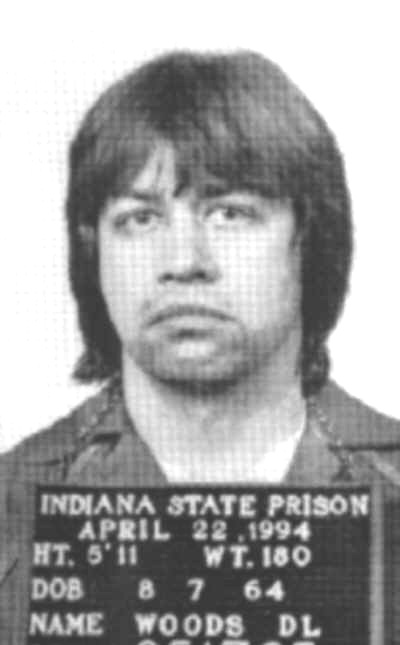
Indiana set to execute David Woods


I learned today that next Friday the State of Indiana will execute David Woods. The Clemency Board just denied his plea. Barring the intevention of Governor Daniels or the U.S. Supreme Court, the state will kill him at midnight as next Thursday turns into Friday.

I plan to raise as much opposition to this as I can. I will lead an HCC caravan this Thursday night to the prayer vigil outside the prison, if this goes forward. People also can join by learning about his case and signing a petition at the Blog of "ND Against State Killing."
As a Catholic, I oppose all execution, but I also have visited for the last 8 years a man on Indiana's death row, have come to know him as a friend. And so I oppose with even more vigor state killing. No matter what someone has done, they are still someone's son, father, brother, friend. Violence never affects just one, as the victims' families can also attest.

Consider this letter yesterday to the Suth Bend Tribune:
May 4 execution first since bar association reported flaws
VOICE OF THE PEOPLE


The pending execution of Indiana death row inmate David Woods on May 4 is a milestone in the history of Indiana's death penalty.

Our nagging doubts and fears about the death penalty system being Indiana's "other lottery" have now been confirmed and thoroughly documented in a recent report by the American Bar Association. Out of this report rises an opportunity to show that Indiana will not stand by while a man is executed as a result of so flawed and suspect a system. Instead, we must show that Indiana stands for fairness and true justice by demanding a hold on executions until the ABA report's recommendations can be further examined and the death penalty system as a whole can be judged.

A moratorium is not only advisable, but is also overwhelmingly supported by 61 percent of Hoosiers as demonstrated in an ABA-commissioned poll. Once the ticking clock of impending executions is silenced, objective examination of this system will expose the inhumanity, inefficiency and injustice of capital punishment. I urge all who are concerned about ensuring the legitimacy of our justice system to petition their legislators and Gov. Mitch Daniels for a stay of Woods' execution and a moratorium on capital punishment.


Will McAuliffe
Co-director
Notre Dame Against State Killing
South Bend

That letters raises significant points. It is true that the family of the victim, Juan Placencia, has asked that clemency be denied and Woods be killed. The victim was the ex-husband of Woods' mother. He was the father of 11 and grandpa to 76 children. His daughter said this: "I have to pray that you deny clemency to David Leon Woods," said his daughter Catherine Placencia, 63, Garrett. "He is the one who did this to my father and our family."

It is clear that David Woods is a man who has not been hardened as a prisoner but has turned to the good, after a brutal childhood (he was abused and neglected) and, yes, his commission of a brutal murder. He admits to the murder and is remorseful.

Some will say he chose death by inflicting death when he was 19. But again, be wary of fuzzy philosophy. Primary moral responsibility for killing David Woods will rest with those who kill David Woods and those who issue the order to kill David Woods. We will look at this case on Monday, but as you all can see, the issues we discuss are not abstract. The state is planning to kill this man. That's real.

Preparing for Final, Part One

The 3 page final paper will ALSO be the basis for your persuasive speech that you give at the final. Again, the final 3 pager + speech can be on the topic of your choosing, but I will list some possibilities below just for extra ideas.

Note: if your final 3 pager and speech is on abortion, you can pick a different topic for your one pager due Monday.

So here are some topic possibilities:
HCC, ND and ROTC
Catholicism and the military oath
The Dilemma of the Public Square
Is there a natural law that is objectively knowable?
Being and American and Catholic
How can religious values be translate into secular values?
Is secularism a sort of religion?
What can philosophy say about the abortion debate?
Should abortion be legal
Are postmodern tools helpful or not in understanding issues?

Final: Phil 102

Apart from our recent discussions of various moral issues like war or abortion, here are some concepts from the first half of semester that you will need to know for short answer part of final:

-the meaning of Plato's allegory of the Cave
-Plato's view of the health of the soul (the 3 parts of the soul)
-the 4 pursuits of philosophy... the True, the Good, the Beautiful, the One
-the idea of the soul, the "I" which remains through all my physical changes
-the proofs for the existence of God
-subjectivism, conventionalism, objectivism
-Natural Law
-a priori vs. a posteriori
-Deontology
-Utilitarianism ("act" utilitarianism and "rule" utilitarianism)
-Virtue Ethics
-The Greek Virtues
-The Roman Virtues
-The Cardinal Virtues
-The Golden Mean
-Askesis
-Eudaimonia
-The Theological Virtues
-The 7 Deadly Vices (sins)
-The Sport Theory of Ethics
-The Garden Theory of Ethics
-The Tests of Virtue Ethics (Arete, Telos, Social and Fruits)

Thursday, April 26, 2007

Ethics and the Environment


This post is mainly for my Theo 351 class, but it does raise larger issues about how truth and agreeement are reached even on a scientific issue. After watching this, do you agree that some industries could intentionally try to confuse and blur issues so that people continue to use a lot of gas and coal?


We know that global warming, or as folls now say, global climate change, is a big potical issue. But what about the ethics of it all? Do we have an obligation to cut down on our consumption? If so, do you see that happening? Are people, are YOU, more conscious about how much gas you use, about not littering, about how much energy you consume?

Monday, April 23, 2007

Run for Hope!


Now is the time to click and register for the Run for Hope this Saturday at 10am. You need to be sponsored (or just sponsor yourself)for at least $10. The proceeds will all go to the suffering people of the Darfur region of Sudan.

If any of my students can beat me, they will get the extra credit. But look out, I am fast! Okay, so sign up now for the Run for Hope by filling out the sheet at the link above and giving it to Mr. Nate Walker in V-157, next to financial aid office.

Abortion and BP Networks


Okay, here's what I want my Philo students to post on. As we have learned in class, one philosophical tool to help engage in moral discourse that is not interminable is to try to understand the web of beliefs and practices that make sense of a particular moral issue. For example, abortion is a very common practice, over a million a year. And many defend abortion to the nth degree. Why? What other B's and P's hold abortion in its place as something to be defended within certain worldviews. What values are being sought after, what other practices are related to it? So, to use our friendly molecular structure, what are the other elements of the paradigm that defends abortion? Think of beliefs as the connecting lines and practices as other atoms in the molecule.

Again, let me say an analysis like this that looks at B's and P's and history, language and culture is not the last step in the process of moral philosophy using postmodern tools. Rather it is the first. Once you understand someone's framework, you can show how this or that practice is or is not coherent with the values their framework attempts to uphold.

So first things first, let's be specific, let's name the beliefs and practices that situate a defense of abortion. Perhaps you think the BP network that justifies abortion is simply incoherent, lacking any structure. If so, say so. Perhaps your focus is on how social conditions give rise to abortion, perhaps on how feminism does, perhaps how a legal framework does. There are many angles from which to view this.

Thursday, April 19, 2007

Mourning


Just a short post to give folks a chance to talk about the aftermath of the Virginia Tech tragedy. It seems that the media focus is on "who did this wrong" or "what different could have been done." All legitimate questions, but does anyone share with me the belief that one important thing to do at times like this is to really grieve, really mourn, really realize that we live in a broken world where evil exists. One reflection I had after the last class was how we all seem to react when the idea of evil, or the Devil, is introduced into discussions like this. As if we are all above that kind of silly talk. But maybe its not so silly: after all, does it really seem we are in charge in this world? Is it not a plausible philosophical conclusion that we are caught up in a cosmic battle between good and evil, a battle that includes us but also transcends us. Is that a plausible, coherent "narrative" to help explain our world? I think so. Share your thoughts on this or any aspect of the tragedy.

Sunday, April 15, 2007

Don Imus, Duke, and History

Okay, rather than posting my own views, let me get the ball rolling with a commentary I heard on the radio from a writer named Steven Barnes. It is short and thoughtful. For a link to listen to it, click here. But the text itself is below. See what you think and post a reaction, giving what you think is his best point or where you think he is off base.

The last two weeks have been a particularly interesting time to be black. Presidential candidate Barack Obama raised $25 million.

Charges were dropped against the Duke University lacrosse team, and talk-show host Don Imus was fired from CBS and MSNBC for racially insulting the Rutgers women's basketball team.

These are odd times, in which 21st Century America struggles to find its social and political soul.

A century ago, Booker T. Washington and WEB Dubois debated whether financial power or social equality represented the best path to improved life for blacks in America.

I've heard Prosecutor Mike Nifong's terrible mistakes in the Duke rape case attributed to over-eagerness, perhaps an attempt to compensate for times when sexual violence against black women was underreported and unprosecuted. But even the best intentions would not excuse damaging three innocent college students.

But where Nifong's horrible mistake probably resulted from social pressure and programming, the Don Imus flap is incredibly revealing about the current state of black America, in a way that both Washington and Dubois would have appreciated.

Certainly Imus' words were in poor taste: Entertainers often balance on this thin edge. One could easily believe that black folks are simply being too sensitive, and there's a part of me that agrees with that. But only part.

Perhaps this is all a tempest in a teapot. Surely we've gone beyond all this terrible stuff. I agree. Race doesn't matter in America…it never has, as long as you're white.

It is normal for those with power to be oblivious to the ways they wield it, profit by it, and fight to keep it. In essence, they're like fish who cannot see the water, but get riled up when someone on shore drinks from a paper cup. I'm sure if the position were reversed, blacks would be just as oblivious, just as self-righteously irritated that whites "just can't take a joke." Pity we've never had that opportunity.

But what we do have is blacks situated on the executive boards of major media conglomerates, working in the law offices of CNN, making decisions at multi-billion dollar corporations.

The Imus storm might have died down if not fed by thousands of letters and e-mails, some orchestrated by the NAACP and other groups. But it was the withdrawal of advertising by General Motors, Procter and Gamble, and American Express (led by an African-American CEO, Kenneth Chenault ) that motivated both CBS and MSNBC to drop Imus. They had been hit squarely in the pocketbook, and it hurt.

Personally, I don't particularly think Imus is a racist. Real racists are rarely so forthright. But if he's a victim of the culture wars, his chastisement sends a message loud and clear: This stuff isn't funny. It never was.

For future reference: Men are not the arbiters of what women find insulting. Nor can straights make that decision for gays. Whites don't get to decide what is or is not insulting to blacks.

Partially because of DuBois, blacks sought and acquired the social equality necessary to pierce the corporate walls. But as Booker T. Washington might have predicted, it is financial pressure that forced a change, that drew a long overdue line in the sand. Two sides of a single social/political coin. They must be smiling.

Welcome to the 21st Century.

Monday, April 9, 2007

Mr. Griffin (with comments by Luke Bruner)

I would like to begin with this cartoon, because it is a seering attack on postmodern philosophy and if I am to defend it I should begin with how opponents see its faults....

... If I came across this scene, I would:
-first tell the dude to lay off the poor guy;
-listen as he perhaps smart-mouths his justification as in the cartoon;
-lay into him with a body check reminiscent of my glory days on the ice. Actually I never checked that well, but I'd shove him nonetheless.

Now for the philosophical basis of my action and how it can square with a postmodern view...

First, I wonder what the anti-postmodern, the believer in objective reason, would do. Would he suppose he could "convince" the guy to see that he is part of a cruel philosophy that is intrinsically immoral? Perhaps, but probably not in the moment. And if that were so effective, why do murders and rapes continue to happen after all these years of human reason? Actually, this brings up another reverse mockery of those who would use this cartoon to say postmoderns would just let the poor guy stay on the ground. The cartoon mentions how postmoderns are so attentive to different "stories"... Well, what if the "story" here were that the guy on the ground was attacking a group of people, and someone was restraining him until all could escape. You see, this would yield a different conclusion. That's not relativism, since it could still issue a moral judgment if, for example, instead of restraining the man someone pumped him full of bullets. So there is room for moral judgment, but to claim it is "objective" is dubious.

... COMMENT BY MR. BRUNER: Pilate and Jesus had differing stories. When Jesus tried to explain the whole objective truth thing, Pilate had a surefire response for him: "Quid Est Veritas", "What is Truth?" Interesting contrast of positions. Objective Truth Vs. Post-Modernism. END OF COMMENT

And so why would I tackle him? Because I am a utilitarian? No. Ah, careful here. I do believe that the ends can justify the means. I just do not believe, as utilitarians do, that a good end or result ought to justify something that is against my code of ethics. And so what is against my code? Well, as a follower of Jesus who looks to the anicent traditions of the saints and martyrs as examples... I see nothing that prohibits tackling! Would I kill him? No, I would not. But tackling and killing are two quite different things.

The cartoon reminds me of how people talk about nonviolence. They make it seem as if it recommends just sitting back as evil goes on. I've heard it so often: "What would you do about Hitler, just sit back and do nothing?" "That, actually, is what America did about Hitler until Pearl Harbor," I usually say. And then I say that there were many, many things people like me (Catholics) could have done. One example is that they might not have thrown millions of bodies into furnaces. That would have helped. Another is that they might have had some guts and refused to persecute Jews. We are so used to thinking that violence is the most powerful force in our world. You would think the bloodshed of a century would show us otherwise; we persist in our illusion, probably because we just really are fascinated with violence.

But I am veering from my point. As for this situation, I really would try to tell the guy to stop. But then, for his own good too, I would move him. Not kill him. Move him. Then I might try to talk with him. But you know the only thing that might, might convince him... not my logic or rational debate skills, but rather my witness as the kind of guy who doesn't just let injustice go by. He might be intrigued by me. Maybe he would start wailing on me and break my jaw. I'd take it. Then he'd be even more intrigued.

... COMMENT BY MR. BRUNER: Yes, the importance of Christians living out their moral values cannot be understated. "The blood of the martyrs is the seed of the Church" is the ancient saying: a great many Romans converted because they saw Christians bravely allowing themselves to be eaten by lions instead of renouncing their faith. "Faith without works is dead. END OF COMMENT

After the incident, yes, it would occur to me that this guy is not living in the same story that I am. To see how I can "judge" his story, see below. But I cannot on my own change his story; I can only share with him another one. But he may go out and do it again, yea, people might go out and murder and rape tonight. Alas, my rational debating skills cannot save the world.

The cartoon also represents another common stereotype of postmodernism. So let me say again: the word "postmoderm" is used best as an adjective and not a noun. There is no group or religion out there called Postmodernism. Rather, it is a way of thinking that people from all kinds of traditions (including Christian) use to help make sense of the world. What ties postmodern views together is 1) a skepticism about using Reason to achieve Objective Truth, along with 2) an emphasis on looking at communities as Formation Systems that aim to produce a particular kind of person.

... COMMENT BY MR. BRUNER: The biggest advantage of post-modernism is that it gives Christians something that we did not have under Modernity: a place at the table. Previously, our position was automatically dismissed and considered unworthy. Being "equally valid" is a big step upward. END OF COMMENT.

Thus a postmodern perspective puts emphasis on communities, understanding beliefs and practices as "true" to the extent that they are in Coherence with the tradition of the community.

Can a postmodern view judge between communities, between stories? I would say yes, but only: a) very cautiously, b) aware of our own bias and c) using the standard of what kind of people the system produces rather than pulling out an isolated action from that community's network of beliefs and practices.

On this most important question, of how to judge among competing stories or narratives, I want to use an exceprt from an AWESOME BOOK, by two postmodern Chirstians, Brian Walsh and Sylvia Keesmat. The book takes its name from one of St. Paul's letters and it titled Colossians Remixed. Here is the part where they describe the standards for judging between stories (what they call "worldviews")....

Any worldview needs to:
1) be comprehensive in scope. Does it open up all of life, or are there serious blind spots?

2) be coherent. Does the vision of life hang together or is it at war with itself?

3) make the community members more senstive to justice and more open to the needs, cries and pain of others (they point out how so many of the great traditions share this trait)

4) be humble about its own claims and therefore open to correction. Recongizing the finite charcater of all human knowing should enatil a humility.

5) be able to generate practices that put into action the worldview. A worldview that does not take on flesh is merely theoretical.

Okay, so I think that was an interesting excerpt. Speaking of practices and taking on flesh, I must go now to one of the strange and radical practices of my coomunity:the Easter Vigil, when we celebrate the Resurrection of Christ, a reality for which I would lay down my life and one in which I only know because of the subjective and totally biased community of which I am a part. Tonight I will look upon some Holy Cross students being baptized in water, and I will see Christ in them. I will not see this with objective or rational eyes. Indeed, another set of eyes would just see a strange ritual. But the eyes in that Chapel will be the eyes of a subjective community which, for over two thousand years, has gathered on this night to look upon this sight.

... COMMENT BY MR. BRUNER: From the earliest days of Christianity it was taught that the sacred mysteries could only be understood from the inside. Thus, you were prepared for baptism, baptized, and then the meaning of the mysteries were given. The practice remains the same to this day. END OF COMMENT.

Saturday, April 7, 2007

Mr. Bruner's Take (with Comments by Mr. Griffin) Postmodernism and a Blood Stained Cross


The crucifixion of Jesus of Nazareth some 2000 years ago reveals a great deal about both Christianity and PostModernism. If the records are to be trusted, Jesus died hanging from a cross on a large hill outside Jerusalem, around 3pm on a Friday afternoon. It goes without saying that crucifixion is not a pleasant way to die.

Let’s be quite clear, Jesus died alone and in agony. His final words are given variously as, “My God! My God! Why have you forsaken me?” (Matthew And Mark), “Father, into your hands I commend my spirit” (Luke), and alternatively “It is Finished” (John). For our purposes today we also take special notice of who was with Jesus when he died: almost nobody.

Only a few weeks before large crowds followed him, but when the going got tough the crowds got going. There were a few “die-hards” (no pun intended) who followed Jesus even to the Cross, but they can be counted on one hand.

PostModernity and Christianity share far more in common than either movement would like to admit. Firstly, both are religions. Secondly, most people that claim to believe their respective religion don’t really believe in it at all. Some may take issue with the first claim, namely, that PostModernity is a religion. However, consider these facts: It teaches a moral system, makes claims about God, makes claims about Truth, provides a worldview and most importantly—requires a great deal of faith.
...COMMENT By Mr. GRIFFIN: I just have to register an objection here, because I do not see postmodernism as a religion. Some may see it that way. I see it as a tool to help make sense of a crazy and confusing world. END COMMENT.

The last two need a bit more explaining. PostModernity advances its own criteria for judging all other worldviews, and so presents a worldview all its own. It may say to Christians, “Your truth is true for you, but not true for PostModernists, and you just don’t know it.” To which Christians would respond, “No, our truth is true for both us and for you, but you just don’t know it.”

What’s going on here? PostModernity is telling another worldview ‘what the opposing view really means, even against the objections of that opposing view.’ Most other religions (Christianity, Islam, Buddhism, Hinduism) honestly admit they do this, and so they organize their worldview in a hierarchical way. With Islam, for instance: There is Islam, then other religions of the book (Judaism, Christianity), then religions that have revealed elements (Zoroastrianism, certain types of Hinduism, Buddhism) then the outright pagans and atheists. Thus, every opposing worldview can be understood in relation to one’s own worldview. The fancy way to sum all of that up is using the term “meta-narrative.”
...COMMENT By Mr. GRIFFIN: Yes, "meta-narrative" is the term used to describe how one sees the connection between their own group's narrative and all the other competing narratives. And yes, the meta-narrative of postmoderns is very reluctant to judge between them, mainly because this judging would be SO biased, so subjective, so un-un-objective. But for postmoderns, subjective is not a bad word! END COMMENT.

Postmodernity is very dishonest in this area. Hierarchical structures are very out of fashion right now in trendy circles, so it claims that all worldviews are equally valid since there are no objective truths. However, some worldviews are just a bit more equal and valid than others *wink wink, nudge nudge * In other words, the Christian worldview is as equally valid as the post-modern worldview... But the post-modern view is the "right way" to look at things anyways. This isn’t so much hierarchical as tyrannical; one is on top, with everybody else equally wrong.

The second of our premises, namely that Postmodernity requires a great deal of faith, also needs a bit of explaining.

Faith is that which a person cannot prove, but which one believes anyways. PostModernity’s central faith claim is as follows: Truth is not objective, there is no objective coherency, and nothing can be proven for certain. That statement cannot be verified by any means. In the greatest historical irony since Japan formed an alliance with Aryan-Supremacist Germany, if you could prove that faith statement true it would actually prove post-modernism false.

And so we return to our starting point: Jesus abandoned at Calvery. Such imagery carries with it a summary of both PostModernity and Christianity.

Very few persons who claim to be PostModernists really are PostModernists at all. Rather, they are followers of what is fashionable and ‘cool.’ When push comes to shove they will make absolute moral claims, declare other world views wrong, argue that there is a “better and worse” way to do something, judge other worldviews (even though PostModernity forbids objective judgment), and deny that they have faith at all in their own system. By their own criteria they are not really PostModernists.

The same can also be said for Christianity. The core Christian claim, “Jesus is Lord” is not really believed by most Christians, in large part because most Christians are watered down by PostModernism (his Lordship is ‘true for us’). His Resurrection from the dead becomes just ‘our story’, and hard teachings are simply ignored.
...COMMENT By Mr. GRIFFIN: I agree with much of this. At the end of the day moral judgments must be made, but postmoderns are just more likely to make them in humility and, no small matter, without seeking to enforce them with killing. END COMMENT.

It seems, then, that we have boxed ourselves into a corner. Neither belief system is ‘coherent’ in the sense that the vast majority of followers live it out as if it were true. An outsider cannot look at PostModernity and see it coherently lived out by its adherents, nor can they do so with Christianity.

But maybe there is a way out of this corner? Perhaps we ought to do the one thing that we fear most: take a good, hard, long look in the mirror. What do we actually see, and actually believe?
...COMMENT By Mr. GRIFFIN: Now I'm intrigued, and listening intently... END COMMENT

In our lives, and in the human condition, there has been and continues to be religious experience. For all the Christian bashing that goes on (and it does seem that Christians are the one group that it is okay to bash), one must admit that the disciples EXPERIENCED something on the first Easter Sunday. It was an experience so powerful that it radically changed each one of their lives. Through the centuries and into the present day Christians have claimed some sort of experience of Jesus as Lord.
...COMMENT By Mr. GRIFFIN: uh huh, that's right, go on. END COMMENT

Hindus, Native Americans, Muslims (and in a different sense, Buddhists) also all make similar claims: that religious experience is real and present in their lives. They may disagree on what the experience means, but the experience seems to really be there. Other experiences can point towards the existence of SOMETHING objective out there: the feeling of being in love, the sense that a person is not gone after their death, awe at the majesty of nature, and the list goes on and on.

All a true PostModernist can claim is that they have not yet had any religious experience. That is the same as saying “since I haven’t been to London, it must not exist.” Lacking experience does not mean there is no experience out there.
...COMMENT BY MR. GRIFFIN: I was with you, still am, but again must insist that postmoderns HAVE HAD such experiences, like I have for ex., and that's my point: it is the EXPERIENCE of religion, not abstract propositions, that grounds the truth and meaning of faith. So, you are right, and Jesus is not Lord because we agree to say he is. Rather, we experience the truth of his Lordship. It's truth can only be seen "from the inside of the life of his community, the Church." END COMMENT.

Though Christians make the most radical claim of any major religion (Jesus is Lord), all the major religions are making (to some degree) the same claim. The major religions are claiming that, through the experience of faith, a human being can interact with an Objective Reality that is radically different than our own. Furthermore, they all go on to claim that interacting with that Reality will change a person forever.

If Jesus is God (as Christians claim), then his life, death, and Resurrection are the most important events in the history of the universe. Here we are, trapped in a subjective reality that we can never break out of on our own… and Objective Reality Itself enters into our very existence so that we may be able to interact with that Reality. Humanity proceeded to reject that Objective Reality, but it responded by the Resurrection. That Resurrection showed what humans could become… living persons who participate directly with Objective Reality. Jesus shared in our humanity so that we may come to share in his Divinity.

When PostModernity says, “We can know nothing objectively” it uses the word ‘know’ in the sense of knowledge, like one knows the score to a football game. When Christianity says, “We can know Objectivity itself” it is used in a very different way, ‘know’ references a relationship, like one can know a friend or a spouse.
...COMMENT BY MR. GRIFFIN: I am with you on this all the way, our "knowing" refers to a relationship. In that sense, I am not inspired to know Mr. Objective Reality. I do want to known the Risen Jesus. END COMMENT.

It is my hope for each and every one of you that in this Easter Season you will come to experience faith and know the Risen Christ. To be a PostModernist is to deny your very humanity, because it assumes that you only know like a robot or a computer knows. But you are all humans who think, feel, experience, know others, and enter into relationship with friends and family. What does your heart tell you is true?

The joys and the hopes, the griefs and the sufferings of all humans, especially those who are poor or in any way afflicted, these are the joys and hopes, the griefs and sufferings of the followers of Christ. Indeed, nothing genuinely human fails to raise an echo in our hearts. For ours is a community composed of all humanity. United in Christ, we are led by the Holy Spirit in their journey to the Kingdom of Our Father and we welcome the news of salvation, which is meant for all.

I remain,

Entirely Yours in Christ,
-Luke Bruner
Friday, April 6th, 2007
The Commemoration of Good Friday

IS CHRISTIANITY COMPATIBLE WITH A POSTMODERN PERSPECTIVE? WHAT'S YOUR TAKE?

OKAY, this post is simply for comments after reading the posts by Luke Bruner and me:

Monday, April 2, 2007

Objective Truth

Okay, the excerpt you received in class (article by Philip Kenneson) is meant to give a defense of how you can both believe in God and be postmodern.

Esentially his point is this: Truth is not something we reach by making certain propositions in the abstract, but rather Truth only emerges when concrete actions within a community make sense. In this sense, truth is relative. Now that usually gets an automatic jeer, but it is not relative in the sense that "anything goes."

Take our example in class: vegetarianism. Is this this practice morally correct? Well, if you are part of a community that has high respect for animals and the environment, then yes it is correct. In more popular culture it does not seem to have much moral weight to it, though.

So for the postmodern, the point is not to start arguing about the practice of vegetarianism, but rather what is interesting is to examine the Narrative and the Worldview that vegetarians hold as true. If you disagree with that, fine, but you ought not judge a group's actions by standards they do not even believe in.

Same with war. It's not that I think war is objectively wrong or immoral. Rather, it simply does not make sense within the worldview/"gospel" I have chosen. Sure it makes sense in other systems, where the practice of war "coheres with" or "jives with" the prevailing narrative. But for me, the prevailing narrative is the story of Jesus and those who follow. Thus if we were to be real specific about the ROTC question, it would be that I think ND is caught between two narratives, two worldviews, the Stories, and is trying to have it both ways.

Postmodernism is very critical of trying to have it both ways.

Finally, a key concept for postmodern philosophy is "FORMATION SYSTEM." All of the various cultural choices we have, music, products, schools, circles of friends" are all formation systems that help make us into a certain type of person. Thus the postmodern challenge is to choose well our formation systems. We can try to be just another cynic (we all know some)who hovers above culture and just says how stupid this group or that movement is, always saying why others are wrong. But the sad part here, acc. to the postmodern, is that these people a) believe they are objective when in fact they are as biased as anyone and moreover b) they never actually make a committment to a community which can offer real meaning. Because for a postmodern, who looks back on history and modern times, the big claim is that we find meaning not from some abstract search for Truth, nor do we get meaning from self-actualization and individual reliance on ourselves; rather we get meaning from being a part of a community, a community which has a story within which the story of our lives can make sense.

So, look again to the links I put below, the positive and negative ones, and then post a quick thought on postmodernism, helping to refine your thoughts for Wednesday.

Friday, March 30, 2007

POSTMODERNISM

Okay, we are about to embark on a weekend venture into postmodernism, the emerging philosophical movement that seeks to respond to the fact that nobody has been able to agree on much in the modern world, and with bloody consequences.

Now even here you can see where an initial criticism could come: one might say; "oh contraire!" The world does agree on quite many things and the modern world has made much progress; would you prefer the Middle Ages?

Indeed, postmodernism raises questions that get pretty interesting, and real. So your assignment will be to do a one pager that tries to explain in your own words what postmodernism is and to give one example of a postmodern principle.

To do this assignment well, you will need to spend some TIME. Below I will give some internet links, but there is much, much, out there on this. And I do NOT want your paper to be some cut-and-paste definition from a site. Rather, try to understand this emerging philosophy.

Here are a few traits of postmodernism:

--it is in reaction to Modernity (1600's - 1900's) and the hopes of the Enlightenment that Reason and Science could produce a common worldview and bring people together. Postmoderns think that project failed.

--it places great emphasis on the community one chooses to be part of. It says that Truth is not something out there that you can express by stringing sentences together in the right way. Rather, Truth is relative to a community. A community or group has Truth when its beliefs and practices are coherent and make sense given what the group is about.

--it is very skeptical of the idea of being "objective" or "neutral." Postmoderns would say that if someone claims to be totally unbiased on a subject, that's when the red flags should go up. Rather, we should seek to understand our biases and rather than trying to "hover above" all the issues of the world, we can committ to a particular community. We may not thus be able to prove objective truth, but we can make sense of our lives.

Now, I must say that there are MANY types of postmoderns. And many types of criticisms of it. We will focus some here on what Christians have said about it, but others use it too. Here are a few links to some positive and negative takes on it-- and look up articles yourself.

Feel free to post responses too, perhaps some classmates can help explain things. Do not be afraid of this big new concept. All postmodernism is trying to do is to understand the world today, and in particular the facts that: a) people have so many, many choices in life that sometimes we make none b) people seem to be, in the moral sphere, speaking different languages c) we seem to have a penchant for resolving big divides through violence.

Okay, here are some links, so start exploring!

Here is an article that criticizes postmodernism as a threat to Christianity

Here is an article that says postmodernism can be a helpful tool for those who minister to youth

Here is one of the most famous essays in postmodernism, "There's No Such Thing as Objective Truth, and It's a Good Thing, Too"

Here is the webpage of today's most articulate advocate for postmodernism and his take on it

Wednesday, March 28, 2007

the ND Prayer / Protest / ROTC Issue


Before reading the blog post, remember that the assignment for Friday is to post a comment on whether Notre Dame should continue to host ROTC given that Selective Conscientious Objection is illegal in the Military and that the Military will not allow a required class in Just War Ethics into the curriculum.

Also, as background, just today the South Bend Trib has published a short follow-up essay by Joshua, since they incorrectly noted he was dishonorably discharged. It addresses the oath that Notre Dame's ROTC grads will take.

So read the whole post, the links, and others' comments. And then give your response to whether ND should continue or should halt the ROTC program. Graham got the discussion off to a good start with a thoughtful response.


It seems important to clarify just what did happen at the protest. A group of persons from the Catholic Worker movement went to Mass at 11:30 at the Basilica. Afterward they went and silently knelt and prayed by the relics of St. Marcellus, a Roman soldier who became a conscientious objector in 298 and was executed after proclaiming he was a soldier of Christ and could not do violence.

After praying at his bones, the group exited the the Church and gathered in front of the Dome building. They then read out the trial of St. Marcellus, from the year 298. I was walking there after finishing teaching. As I approached, I saw the group. I was impressed from a distance as I saw an actor arresting one of the group, part of the play I figured.

As I approached, I saw that this was not part of the play. People were being arrested. The group had not even begun to carry the coffins into the building. After Mass, apparently security was ready. They were told to leave, but they responded that they wished to read aloud the story of this saint. When they did, the arrests began. Read the Observer article here.

Rather than debating the ethics of whether arrests should have been made, let us use this chance to have an academic and respectful debate about the points raised. Here is a brief excerpt of the letter the group issued to Father Jenkins, and then let the discussion begin:

Dear Fr. Jenkins,
With great joy, we Midwest Catholic Workers celebrate the Feast of the Annunciation at the University of Our Lady, the Queen of Peace. Stiving to emulate Mary's humble "Fiat" (Latin for Yes, let it be done, which Mary said to the angel), we pledge ourselves to bear witness as disciples of her Son, the Prince of Peace.

We believe Notre Dame has ceded its autonomy as a Catholic institution of higher education and compromised the values of its mission by allowing the Department of Defense to exert financial and academic control over the education of its ROTC students.

We call upon Notre Dame to reject military funding for ROTC. Second, we would like to see a more vigorous committment to supporting those who wish to study peace. ANd finally, we urge Notre Dame to support generously those who in conscience decide they can no longer participate in ROTC but wish to continue their education at Notre Dame.

We ask Our Lady, the Queen of Peace, to pray for Notre Dame, the pre-eminent American Catholic university (they forgot Holy Cross), that it might bear ever more faithful witness to Jesus Christ, her Son, the Prince of Peace.

Monday, March 26, 2007

the Catholic/Christian nature of our discussion

Let me just say that these have been good, and important, discussions. Some have mentioned the Catholic/Christian nature of most peoples' points. This does not mean other faiths or those without religious faith do not have to face these issues, but it is hard to tackle an issue so generally. But Catholicism is a specific religion that has specific principles. As to Tim Fox's point of what Catholics say not mattering a whole heck of a lot, I see your point. But what if Catholics starting acting on such principles? It would be tough to dismiss the fact that thousands, or tens of thousands, refuse to comply. I am not judging those who would or would not do this, but simply saying it would be significant. For religion, the power to cooperate or not cooperate is a mighty resource.

Friday, March 23, 2007

Conscience in the Crossfire


Well, our symposium at HCC last night certainly created some energy. The main focus of disagreement could have been many things, but the focus clearly became the military oath. Even in the article done by the South Bend Tribune, this matter was at the center of the debate over Catholics and war. By the way, the TRIB did have an error: Joshua was honorably discharged.

So, to really use this event which we were privileged to host, the assignment for my classes is to take some time to reflect on some of the issues I raise here below, to post a comment discussing a particular point or responding--in full respect always--to another's point. After you have posted a comment, then write a 2 page essay that simply makes one or two points you think are essential to the ethics of war and peace. It might involve the high-profile case of Lt. Ehren Watada, who is now facing six years in prison as the first high ranking officer to refuse to deploy to Iraq. Here is a news article on Lt. Watada and the Wikipedia entry on him.

To get a specific sense of the issues at stake for Catholics, you could look at the article, just released today, about our peace efforts in Rome. It lays out the issues well.

You might also check out this other link about Joshua's story and write about whether you agree with him that Catholics should take the military oath.

Or, as you do this, look up the section of the Catechism of the Catholic Church, Section 2310 that Lt. Col. Jordan says justifies military service. Joshua pointed out that this section has 3 footnotes that cross-reference other sections which place some important contexts for military service. What do you think?

Okay, letting the blogging and in-depth writing begin...

Monday, March 5, 2007

FOCUS MIDTERM, Part I

Okay, so again a reminder that we do not have class Wed or Friday, but your midterm assignment is due on the table outside my office by 9:45 am Friday. Here are the topics: Remember, you choose 2 of them and do one page on each, according to the guidelines I gave. If you have any questions, simply "post up" a comment and I''ll "post up" the answer.

-Briefly explain 3 proofs for the existence of God and which one you find most, or least, compelling.

-If you were explaining to your 12 year old cousin what "the soul" is, how would you do it using Plato and using Mr. Griffin's analogy of pictures at different stages of life?

-Using Plato's definition of the healthy soul for the individual and for society, how does American society measure up? How does your own life measure up?

-Use the Garden Theory of Ethics to analyze college life at Holy Cross College

-Suppose Kant and Aristotle both were giving advice to the family of someone who has been sick and bed-ridden for years and wanted euthanasia. How would their advice be different?

-Using the 4 "Tests" for applying Aristotle to specific situations, do you think his Virtue Ethics is more subjective or objective?

-Give one modern day example of Deontoloy, one of Utilitarianism, and one of Virtue Ethics being used to face a situation.

-Suppose you are a soldier at war. Is there a way to justify, WITHOUT using utilitarian reasoning, intentionally killing an enemy conbatant or torturing a prisoner to get information about possible terrorist attacks?

FOCUS MIDTERM, Part II

Okay, for all in my Philosophy class, I want to be clear that the decision to have a take-home, essay midterm does NOT mean that you are not responsible for all of the material. It hit me today that we have covered A LOT of ground, and I want to make sure you know it. So, let me review what you should know. At the least, know that all of these will be on final, final exam. Also, the more you show mastery--or shall I say "arete"--in these topics, the better your midterm essays will be.

So here is a brief list of things you should know from what we have covered:

-the meaning of Plato's allegory of the Cave
-Plato's view of the health of the soul (the 3 parts of the soul)
-the 4 pursuits of philosophy... the True, the Good, the Beautiful, the One
-the idea of the soul, the "I" which remains through all my physical changes
-the proofs for the existence of God
-subjectivism, conventionalism, objectivism
-Natural Law
-a priori vs. a posteriori
-Deontology
-Utilitarianism ("act" utilitarianism and "rule" utilitarianism)
-Virtue Ethics
-The Greek Virtues
-The Roman Virtues
-The Cardinal Virtues
-The Golden Mean
-Askesis
-Eudaimonia
-The Theological Virtues
-The 7 Deadly Vices (sins)
-The Sport Theory of Ethics
-The Garden Theory of Ethics
-The Tests of Virtue Ethics (Arete, Telos, Social and Fruits)

Now, if you can think of other topics covered I missed here, post up a comment and throw 'em in there

Theo 351: Catholic Social Teaching Midterm


So I have just spent a good bit of time researching the facts that form the empirical basis of your midterm projects. Obviously, when it comes to global resource statistics, you see different figures, but I have decided to go with the most conservative estimates and figures, which are still rather startling. Of course, the exact figures are not the point of the project: any way you slice it, our country is using a far higher percentage of resources than the percentage of population. The key to your midterm is how you analyze this theologically. So that you can focus on this task, here are some stats that you can use. The first one does not deal with overall "resources" but is focused on energy. Still, it seemed to be the figure most often agreed upon.

Americans constitute 5% of the world's population but consume 24% of the world's energy.

The richest 10 percent of Americans (about 30 million people) have an income greater than the poorest 43 percent of the world's people (2 billion)

On average, one American consumes as much energy as
6 Mexicans
13 Chinese
31 Indians
128 Bangladeshis
370 Ethiopians

Americans eat 815 billion calories of food each day - that's roughly 200 billion more than needed - enough to feed 80 million people.

Eighty percent of the U.S. corn grown and 95% of the oats are fed to livestock.

Fifty-six percent of available farmland is used for beef production.

Every day an estimated nine square miles of rural land are lost to development.

As you work on your theological responses (in the prophetic style, through a parable, and in Compendium-style), if you have any questions, just post a comment here or email me.

Friday, March 2, 2007

Virtue on the Weekend

Okay, I am about to set off on the Spes Unica retreat. But before I go, let me leave you some good reading. This is a link to an article I referred to in class. It is by a philosopher at Boston College. If you can, read it all; if not look some of it over. By the way, he calls "prudence" "wisdom" and there are a few other things not up to Griff standards, but it is thought-provoking.

And for those who have not yet left a comment, do so. This blog can really create a continuing diaolgue. And just think, because you will be alums of this class, you can be on this blog 4 eva!!!!

Peace,
MG

Get in the Wagon!


A recent comment referred to schools that are "Ferraris" and Holy Cross as a "wagon." Well-said, awesome! Wagons are great:
-they are versatile, can carry extra weight
-they can welcome extra folks who need a lift
-they are not so high maintenance
-you don't have to be rich to have a wagon
-they are not so prissy that you have to worry about dinging it up
-great place for great conversation

Of course my point here was that Holy Cross can be a place that is different. We all have to work to get there... sometimes you gotta get out and push the wagon. But when the comment said people do not choose schools in order to learn virtue, I say, and Aristotle says, seriously, there is no other reason to pick a school.

Wednesday, February 28, 2007

More on virtue and college life

Okay, so I am glad we are applying Aristotle and Virtue Ethics to such relevant issues. I was surprised to hear so much skepticism that collegians could not go a week without getting drunk. I doubt that this is true, except for those who are predisposed to alcoholism.

Anyway, let me broaden the issue some. MSNBC just reported on a study of college students that is leading some to use the term "Generation Me." It involves a massive survey done (not by Beck, unfortunately) by 5 psychologists. It involved 16,475 college students,

I want to get a discussion going on this survey. I'm not sure how I see the matter, but all of you, without being defensive toward the article, can react and give suggestions. So read it here and then post comments.

The study uses the word narcissim a lot. For the roots of that word, see post below...

Narcissism


It begins with the Greek legend about Narcissus, a young man who as a punishment from the gods is doomed to become obsessed with and fall in love with his own reflection, which he constantly gazes upon in the water. Thus the term refers to an excessive self-admiration. Not that we should not love and respect ourselves. But if we come to think that our life is really just about me, then we risk Narcissism and, more importantly, we risk losing true eudaimonia.

Monday, February 26, 2007

Virtue and Alcohol

To follow up on class discussion about how one might use virtue ethics to guide campus drinking rules, I went and found the '99 Harvard study on campus drinking. The study can be read here. It reports that 44% of U.S. college students engaged in binge drinking during the two weeks before the survey. Now, as some said "let bringers just face their own consequences." Problem is, often drinking affects others. When asked about effects of another's drinking....

71% had sleep or study interrupted
23% had a serious argument

57% had to take care of an intoxicated student
16% had property damaged

36% had been insulted or humiliated
11% had been pushed, hit or assaulted

23% had experienced an unwanted sexual encounter
1% had been the victim of a sexual advance, assault or "date rape"

So, what are some thoughts here? Surely it is not a fact, is it, that college just means irresponsible drinking, right?

Radical Stuff


So today in Catholic Social Teaching class we discussed that often ignored principle of "the universal destination of goods." This is not feel-good pity, but a theological claim of the Church. The Compendium, after making the point that God intends the earth's resources for all, and not just the wealthy, goes so far as to say this: "All other rights, whatever they are, including property rights and the right of free trade, must be subordinated to this norm [the unviversal destination of goods."

This reminded me of the quote by St. Basil the Great (329-379)

“The bread in your cupboard belongs to the hungry man; the coat hanging unused in your closet belongs to the man who needs it; the shoes rotting in your closet belong to the man who has no shoes; the money which you put in the bank belongs to the poor. You do wrong to everyone you could help but fail to help.”

What to make of all this... I had forgotten the money in the bank part. Whoa! Should disciples of Christ back down from this claim and get on the unfettered capitalist train, saying that the right to private property trumps universal destination of goods? Is there a "golden mean" on this issue? Are there small ways we can work against inequity, or is it a lost cause?

Saturday, February 24, 2007

Accessing Aristotle


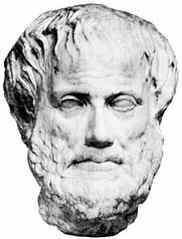
He lived a long time ago, and as those in my Philo class know, it is not easy to "translate" him into modern ethical dilemmas. We want answers, what to do in situation x or in case y. But the big A is not always interested in this. So the question is (literally, for my students doing their essay this weekend) does Aristotle give a sufficient "action-guiding" approach to ethics? Or, as one student put it, is it simply a focus on how to become "virtuous" but that what "virtuous" means will vary from person to person? If so, this would be a form of moral relativism. But scholars of Aristotle resist that charge. They say that he does define virtue, and that while he gives no rule like the "categorical imperative" of Kant to apply in every case, Aristotle does provide an approach to making all of our decisions. So let's get into this here for a moment, so we all can shed some more light on the questions.

Some key quotes (on pg. 414-415) show that Aristotle admits that "scientific exactitude is impossible in treating particular ethical cases." Do you agree? A also says that if we use "right reason" we can achieve "a sketch" of what good conduct looks like. So in the particular cases that people face everyday, like....

-should we stop the feeding tube for our comatose and elderly mother?
-how much alcohol should I drink, if at all?
-how much money should I keep in the bank and how much give away?
-should my partner and I have sex?
-will I be honest with a friend who needs to be challenged?

...one has to use reasoning to show one course of action is better. And how do we judge "better." Well, by which action is more in accord with the virtues. We start asking questions about how this or that virtue would be present in a course of action. It may not be math or offer a quick answer, but it would sure frame the right questions to ask ourselves.

Now, the Big Point of Aristotle is that the only way to really have wisdom (phronesis) on these matters is through formation and training (askesis) in good habits. This is why for A education is so key: people have to be trained to recognize the true, the good, the beautiful. Part of this is objective (a sunflower just IS more beautiful than a weed) but without training, A said, a person (or even a culture!) can get warped into confusing what is false for what is true.

The next biggest point of Aristotle is that the life of virtue and arete (excellence) is necessary for true eudaimonia (happiness, human flourishing). So here too we have some help in deciding how to handle particular cases. Act in such a way that we flourish and are happy. Now, the text gives many quotes as to how this is not some superficial happiness, but deep and profound happiness. So what the Big A is doing here is (in my view) brilliantly getting us to include deep happiness in discussions about mundane, everyday choices. It makes us take the long view, not just looking at "what works" or "what feels good" or "what must be done." Rather, what actions will help us realize our true end (telos) as human beings. That, says A, is what it's all about.


One last point: we still have to look at the question of pluralism. Different cultures have different accounts of virtue, even different accoutns of what it means to be happy. Let me share a story:

Each year on the Ghana trip we get to know the Holy Cross Bros. Well. last year one of them had just returned from a trip to a funeral in the northern region of Ghana. He told me he had traveled there with his mom. I asked, "who died?" "My father's wife," he responded. Uh, what? "Oh yes, Mike Kofi (my name there), my father had three wives, and it is a sign of respect and virtue that when a wife dies the others attend."

Okay, so very different notion of virtue here. Does that mean that virtue is relative? Well yes and no. What it mostly means is that particular practices (we could compile a long list, involving behavior in the area of sexuality, money, food, religion, friendship, killing, work...) take their meaning from a cultural context.

Perhaps it looks like this:

-Some principles seem to be basically objective and universal (respect for elders, aid to the poor, dignity of marriage, care for children).

-The practices that apply those principles vary, according to the moral traditions in the community of which one is a part.

-The virtues that result from being trained in those practices thus also vary some, according to the community.

-Whether an action is "moral" depends on how it relates to all of these: the universal principles, the community's practices, the shared notion of virtue.

Thus, for Virtue Ethics, a lot depends on the community. What is going on now is that the notion of "community" and "tradition" have broken down, and people are left to wonder: "Is there such a thing as 'right' and 'wrong'?" Since there is no scientific, objective agreement "out there", they say "No, morality is all just a matter of opinion."

But they say this because we have largely lost one of the above mentioned three pillars of Virtue Ethics: the moral tradition of a community. Maybe this is why some say Aristotle is not "objective" enough and that all he can give is "a sketch." I mean, he WAS part of a community that had traditions and practices; there was a consensus about what virtue was, or at least a common set of terms to debate it. Now, we lack that; everyone has different assumptions. We mainly try to "go it alone" in ethics.

And this, in my view, is why deontology and (esp) utilitarianism are so popular. They give ME a way to figure things out. But what gets lost in this is a shared sense of virtue and happiness that I simply cannot find alone. To find such meaning, at least according to Aristotle, we need communitty and tradition. It is a kind of midpoint, a "Golden Mean" if you will, between individualism on one hand and total world-agreement on the other. Okay, so those are some thoughts that I hope help frame the discussion.