Some possibilities, though I am open to others. Remember, the point of watching one of these is to expand our understanding and challenge our own particular point of view. So here are just some suggestions:
Munich (about the attack at the 72 Olympics and Israel’s response)
Paradise Now (about two friends who enter the process to become suicide bombers, targeting Israel)
Promises (about Israeli and Palestinian children sharing experiences)
The following are about the Iraq War:
Body of War
No End in Sight
In the Valley of Elah
The Dreams of Sparrows
Monday, March 17, 2008


Friday, February 15, 2008
Africa Movie Time
Here are the options. You can search online for a synopsis of each, but all have been recommended:
Bamako (this relates a lot to our class; more info here
The others you've probably heard of:
The Last King of Scotland
Blood Diamond
Hotel Rwanda
Sankofa (may be difficult to find)
Out of Africa
Roots (any one of the series)
Cry Freedom
The Power of One
The Constant Gardener
SO POST YOUR REVIEWS HERE, TO THIS ENTRY:
Bamako (this relates a lot to our class; more info here
The others you've probably heard of:
The Last King of Scotland
Blood Diamond
Hotel Rwanda
Sankofa (may be difficult to find)
Out of Africa
Roots (any one of the series)
Cry Freedom
The Power of One
The Constant Gardener
SO POST YOUR REVIEWS HERE, TO THIS ENTRY:
Friday, January 18, 2008
MOVIE-TIME: India

Okay folks, here is a list of potential movies to watch about India. When you have watched one, post a reply below that gives your basic review and also what it taught you about Indian culture or history. Here are some choices:
Monsoon Wedding
City of Joy
Miss India Georgia
Mississippi Masala
I Have Found It
Bride and Prejudice
(both of these are based on Jane Austen novels)
Earth (a film by Deepa Mehta)
English August
Bend it Like Beckham
Gandhi (counts for double)
Mr. and Mrs. Iyer
A Passage to India
Salaam Bombay
A Train to Pakistan
Friday, October 12, 2007
The Truth about your T-Shirt

Folks, a friend recommended to me the article below on the cotton industry. I was not surprised but troubled. It has made me want to know more and more about products that are "fair-trade" (vs. merely "free-trade" and about organic products.
While some may bemoan big business and big money, the fact is this: what drives our economy is consumer demand. So the moral resposibility is ours to decide how we consume.
Here is an odd idea: maybe there is already enough stuff (clothes, household items, etc) out there that we could join the many (like Catherine and me) who prefer to buy used. It's spending you can feel good about!
Anyway, check out the article and remember, what we wear and what we eat and what we drive and how we live all have moral ramifications!
Fashion Victims: the Truth About Cotton
Wednesday, October 10, 2007
Reflections on Moreau lecture

Well, Brother John Tryon had an interesting talk, urging all of us not to make Moreau into an unrealistic icon of a super-human. Rather, he wants Moreau to be seen as very human, and his saintliness in precisely his bold humanity. Further thoughts...
MOVIE REVIEWS

Some of you have been watching particular movies for my classes. Share the movie you watched and what you thought here. Consider it like Ebert and Roper but deeper.
Monday, October 8, 2007
Thoughts on Immigration Forum
Well, the ND Forum just ended, and now is the chance for those in my classes to share their views. So, who was the best speaker and why? What was the most insightful comment or moment? Or maybe you just want to share your ideas on some of the issues raised. The floor is yours....
Friday, October 5, 2007
WHAT's YOUR CARBON FOOTPRINT?

Many people, from all viewpoints, are talking today about carbon dioxide emissions. Where do they come from? From us, of course! So now there are ways to calculate how much YOU produce, and compare that to other Americans, and others in the world. It's called figuring out your "Carbon Footprint" and can be done at the site below. It is quick and easy, asking some basic questions which you can estimate.
Now, for those who are brave, after going to the calculator site, POST BELOW WHAT YOUR CARBON FOOTPRINT is and then say if you want to work to lower it or not, and why or why not. I chose this site because it is from a very longstanding and respectable group, and gives commonsense tips about how to lower your score. Here it is:
CALCULATE YOUR CARBON FOOTPRINT
Friday, September 28, 2007
Mother Teresa and St. John of the Cross
In my Theo 450 class, we discussed the newly released letters of Mother Teresa, which indicate she went through some very dark times in which she was face to face with loneliness and spiritual doubt. This is what St. John of the Cross, in the 1500's, called "The Dark Night of the Soul."
Well, St. John has much to teach us. Below is a reflection by a priest of our own day, Fr. Richard Rohr. He is a challenging voice in our culture, one which echoes the early desert monks and mystics like St. John of the Cross.
Read this reflection and see if it helps understand why Mother Teresa would have experienced the Dark Night of the Soul.
True spirituality is utterly countercultural because it's non-merchandisable, non-measurable, non-provable. It is precisely nothing. Who wants to be nothing in this world? This culture's goal is for us to be something, to be everything, "to win friends and influence people."
St. John of the Cross puts it this way: "In order to come to pleasure you have not, you must go by a way that you will enjoy not. To come to the knowledge that you have not, you must go by a way that you know not. To come to the possession that you have not, you must go by a way in which you possess not. To come to be what you are not, you must go by a way that you are not" (Ascent of Mount Carmel, I, 13, #10).
We fear nothingness, of course. That's why we fear death, too. I suspect that death is the shocking realization that everything I thought was me, everything I held onto so despera tely, was precisely nothing. The nothingness we fear so much is, in fact, the treasure that we long for. We long for the space where there is nothing to prove and nothing to protect; where I am who I am, and its enough. Spirituality teaches us how to get naked ahead of time, so God can make love to us as we really are.
--Fr. Richard Rohr, from Letting Go: A Spirituality of Subtraction
If you are interested in receiving Rohr's short daily meditations, it is easy. Just click here and sign up!
Well, St. John has much to teach us. Below is a reflection by a priest of our own day, Fr. Richard Rohr. He is a challenging voice in our culture, one which echoes the early desert monks and mystics like St. John of the Cross.
Read this reflection and see if it helps understand why Mother Teresa would have experienced the Dark Night of the Soul.
True spirituality is utterly countercultural because it's non-merchandisable, non-measurable, non-provable. It is precisely nothing. Who wants to be nothing in this world? This culture's goal is for us to be something, to be everything, "to win friends and influence people."
St. John of the Cross puts it this way: "In order to come to pleasure you have not, you must go by a way that you will enjoy not. To come to the knowledge that you have not, you must go by a way that you know not. To come to the possession that you have not, you must go by a way in which you possess not. To come to be what you are not, you must go by a way that you are not" (Ascent of Mount Carmel, I, 13, #10).
We fear nothingness, of course. That's why we fear death, too. I suspect that death is the shocking realization that everything I thought was me, everything I held onto so despera tely, was precisely nothing. The nothingness we fear so much is, in fact, the treasure that we long for. We long for the space where there is nothing to prove and nothing to protect; where I am who I am, and its enough. Spirituality teaches us how to get naked ahead of time, so God can make love to us as we really are.
--Fr. Richard Rohr, from Letting Go: A Spirituality of Subtraction
If you are interested in receiving Rohr's short daily meditations, it is easy. Just click here and sign up!
Thursday, September 27, 2007
Thought from Service Class
Basically, the points I made yesterday about "Modernity" are this:
Descartes comes long in the 1600's and says THE DEEPEST CORE OF "SELF," of "I" is my reason, my mind.
Then comes Nietzche in the 1700's saying God is dead and religion is foolish because THE DEEPEST CORE OF "I" is this need for self-assertion, what he called the "will to power."
Then Freud enters the picture, saying, "no no, its not our mind nor our will, but rather THE DEEPEST CORE OF "SELF" is the libido, sexual drive."
So then, where does that leave us? Well, it has left "Modernity" (1600's - present) being skeptical of the ancient claim of Christian theology, which says this in response:
"INDEED, THE MIND WANTING TO 'FIGURE LIFE OUT' IS DEEP WITHIN US; INDEED THE NEED FOR SELF-ASSERTION AND POWER SEEM SO MUCH PART OF "I"; AND NO DOUBT OUR SEXUAL APPETITE IS CENTRAL TO THE SELF; YET NO MATTER HOW DEEPLY IMBEDDED THESE DESCRIPTIONS OF "SELF" ARE, THE "I" GOES EVEN DEEPER. There is an "I" that seeks to love for the sake of loving, an "I" that is not controlled by thought (Descartes), power (Nietzche_ or even sex (Freud). This "I" can only be moved by God.
This claim was articulated most clearly by St. Augustine in the 400's: "God is more inner to me than I am to myself," and because of this "our hearts are restless until they rest in God."
How do we find this "I"? Well, the Christian tradition offers 2 practices, 2 "training programs".....
SILENCE AND SERVICE. Both of these, best done together, can get us (to put it crudely), "out of our head," "out of our egos" and "out of, well, you figure this one out."
Descartes comes long in the 1600's and says THE DEEPEST CORE OF "SELF," of "I" is my reason, my mind.
Then comes Nietzche in the 1700's saying God is dead and religion is foolish because THE DEEPEST CORE OF "I" is this need for self-assertion, what he called the "will to power."
Then Freud enters the picture, saying, "no no, its not our mind nor our will, but rather THE DEEPEST CORE OF "SELF" is the libido, sexual drive."
So then, where does that leave us? Well, it has left "Modernity" (1600's - present) being skeptical of the ancient claim of Christian theology, which says this in response:
"INDEED, THE MIND WANTING TO 'FIGURE LIFE OUT' IS DEEP WITHIN US; INDEED THE NEED FOR SELF-ASSERTION AND POWER SEEM SO MUCH PART OF "I"; AND NO DOUBT OUR SEXUAL APPETITE IS CENTRAL TO THE SELF; YET NO MATTER HOW DEEPLY IMBEDDED THESE DESCRIPTIONS OF "SELF" ARE, THE "I" GOES EVEN DEEPER. There is an "I" that seeks to love for the sake of loving, an "I" that is not controlled by thought (Descartes), power (Nietzche_ or even sex (Freud). This "I" can only be moved by God.
This claim was articulated most clearly by St. Augustine in the 400's: "God is more inner to me than I am to myself," and because of this "our hearts are restless until they rest in God."
How do we find this "I"? Well, the Christian tradition offers 2 practices, 2 "training programs".....
SILENCE AND SERVICE. Both of these, best done together, can get us (to put it crudely), "out of our head," "out of our egos" and "out of, well, you figure this one out."
Tuesday, September 25, 2007
MONKS and POLITICS

In the Asian country of Nyanmar (formerly knownas Burma) something amazing is happening right now. Enormous amounts of people, being led by Buddhist Monks who have come from monasteries into the streets, are protesting an oppressive military government. The government is threatening military violence on the protesters. Yet the monks are saying that threats will not cause them to back down. Read the full story by clicking here,
Friday, September 21, 2007
THE ENERGY CHALLENGE
As we saw in class, there is so much to learn about energy: its sources, its uses, its dangers and its promises for our world. So, this weekend let us begin.
I am technologically unable to convert today's Power Point to a webpage for linkage here. Perhaps Felipe will help figure that out. Until then, though, here are two things. First, a video on energy. I watched it; it is of a student using media clips to present on the topic of "peak oil," which is related to what we are studying. I found it interesting and provocative. We will talk about other points of view on Monday.
Also, I ask that you look through the following series of articles on energy at the globalissues.org site. When you have looked at these materials relating to our presentation today, post your comments below. I want everyone to post something insightful on what we learned today or what you read. Questions are okay, too.
I am technologically unable to convert today's Power Point to a webpage for linkage here. Perhaps Felipe will help figure that out. Until then, though, here are two things. First, a video on energy. I watched it; it is of a student using media clips to present on the topic of "peak oil," which is related to what we are studying. I found it interesting and provocative. We will talk about other points of view on Monday.
Also, I ask that you look through the following series of articles on energy at the globalissues.org site. When you have looked at these materials relating to our presentation today, post your comments below. I want everyone to post something insightful on what we learned today or what you read. Questions are okay, too.
Monday, September 10, 2007
The Luckiest Nut in the World
Okay, here is the video I wanted to show in class. It is not long, and does not explain all facets of anti-globalization views, but it does show 2 points in detail:
1) it tells an actual story of how one African nation came to be in serious debt to the World Bank
2) it does show how the World Bank encourages "liberalization" (which = removal of trade barriers to ensure a free-market) while some parts of American agriculture do not practice the same liberalization here.
Also, I want to mention here the site where I found this. The site was recommended to me by our very own class member Elliot Majers. The site has material on almost every issue we will address this year; it should not be the only site you turn to, but it is a respected and well-researched site. It is called globalissues.org
So enjoy the video, notice a reference to Ghana, its flag and the product that it also is a big exporter of: ground nuts.
1) it tells an actual story of how one African nation came to be in serious debt to the World Bank
2) it does show how the World Bank encourages "liberalization" (which = removal of trade barriers to ensure a free-market) while some parts of American agriculture do not practice the same liberalization here.
Also, I want to mention here the site where I found this. The site was recommended to me by our very own class member Elliot Majers. The site has material on almost every issue we will address this year; it should not be the only site you turn to, but it is a respected and well-researched site. It is called globalissues.org
So enjoy the video, notice a reference to Ghana, its flag and the product that it also is a big exporter of: ground nuts.
Friday, September 7, 2007
Know Your Bank
As members of the world, we should know our World Bank. AND SO, Monday in class I will begin by asking you to explain the powers, and controversies, of this institution. As I have said, so much of what we will study depends on knowing the assumptions guiding one's view of the world. It also depends on knowing how globalization is happening. And no institution is more a part of globalization--for better or worse--than the World Bank.
Here are two links below, one positive toward the World Bank (and IMF, be sure to understand the difference) and the other quite negative. Read them both. Use other sites as well to really get a handle on what the World Bank is. On Monday, each of you should be ready to explain what the World Bank is, how it works, and why it has been so controversial.
http://www.imf.org/external/pubs/ft/exrp/differ/differ.htm
http://www.50years.org/pdf/GG-Sample.pdf
Here are two links below, one positive toward the World Bank (and IMF, be sure to understand the difference) and the other quite negative. Read them both. Use other sites as well to really get a handle on what the World Bank is. On Monday, each of you should be ready to explain what the World Bank is, how it works, and why it has been so controversial.
http://www.imf.org/external/pubs/ft/exrp/differ/differ.htm
http://www.50years.org/pdf/GG-Sample.pdf
Monday, September 3, 2007
GLOBALIZATION and poverty
One of the most talk-about proposals for using globalization and capitalism to help developing countries is the. This project is led by economist Jeffrey Sachs and supported by institutions such as The World Bank. The Millennium Project has goals to achieve by 2015 (here is an interacive map of goals) and also has named 12 "Millennium Villages" in Africa that will demonstrate how technology and investment can reduce poverty.
Here is a short video of Sachs. Note that he says "Agricultural Revolution," by which he means an end to subsistence farming an the introduction of commercial farming, is essential to development. This reduction of subsistence farming is at the heart of the debate over globalization. Listen in...
Here is a short video of Sachs. Note that he says "Agricultural Revolution," by which he means an end to subsistence farming an the introduction of commercial farming, is essential to development. This reduction of subsistence farming is at the heart of the debate over globalization. Listen in...
The World Bank
To see how the World Bank explains its own mission and responds to criticisms, click here. For a critical look at the how the World Bank was formed, check out this lecture excerpt:
Monday, May 7, 2007
CRUNCHING THE NUMBERS

Okay folks, wow this takes a while; you had a lot of grades to be computed! Below are point totals. The first # was your points at midterm; the # of possible points for that period was 165.
The second # is your points since the midterm. We have had more grades (and more extra credit!) that are now all added up. The # of possible points is 275.
That means so far we have a possible 440 points.
The final essay will be worth 50 points and the presentation will be worth 50 points. So the overall points for whole semester will add up to 540.
I WILL then, as I did at midterm, do a curve (showing great mercy for you), with the top 10 students receiving A or A- for the semester; the next 10 will be in B range, and the next 10 in the C range, and hopefully not many below that. That means almost 1/3 of the class will get A or A-, and the average grade will be in somewhere in the B/B- range. That's pretty good.
On the final, doing a great job will land you between 45 and 50 on each part. To get a 50 it must be simply exceptional. If you do a decent job you will get in the 40 range on each part. So work hard and turn in papers that are typo and error free and which make clear and concise points. And practice your 3 minute speeches. I WILL be timing them, so do not go more than 45 seconds under or over.
Remember to make comment on this post if you want to come for the early final at noon on Thursday in V-143.
Alright, then, add up your scores and see where you will stand depending on how well you do on the final...
800031357 77 150
800023132 153 262
800019819 116 204
800041681 124 229
800035014 151 299
800025391 136 199
800035726 150 192
800033807 87 163
800028022 141 205
800035221 159 224
800023261 117 261
800041689 82 187
800040930 151 216
800036478 159 132
800035958 132 244
800023380 129 205
800054445 137 230
800026035 89 83
800027445 113 168
800034120 145 173
800047245 86 147
800035197 166 237
800022382 75 226
800046491 173 219
800037933 148 202
800035366 92 221
800041728 95 159
800034487 37 10
800047141 131 241
800045876 175 262
800036370 112 212
800021036 127 171
Wednesday, May 2, 2007
Still Not Done
This grading takes a long, long time. I insist on reading papers carefully. So here is the deal. The big reason to do this extra informing you of where you are at is to help you really crank it up for the final, so I will get you not only your present points but your present grade and how much it can be raised / lowered by your final. That will take longer to compute but will be more useful, I assume. So you will get that Friday.
As for now, my fiancee Catherine is waiting for me to meet her for dinner.
Peace all,
As for now, my fiancee Catherine is waiting for me to meet her for dinner.
Peace all,
Friday, April 27, 2007
Indiana set to execute David Woods
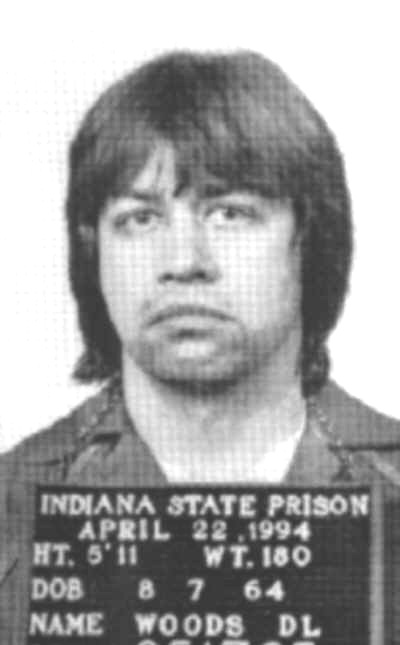
I learned today that next Friday the State of Indiana will execute David Woods. The Clemency Board just denied his plea. Barring the intevention of Governor Daniels or the U.S. Supreme Court, the state will kill him at midnight as next Thursday turns into Friday.
I plan to raise as much opposition to this as I can. I will lead an HCC caravan this Thursday night to the prayer vigil outside the prison, if this goes forward. People also can join by learning about his case and signing a petition at the Blog of "ND Against State Killing."
As a Catholic, I oppose all execution, but I also have visited for the last 8 years a man on Indiana's death row, have come to know him as a friend. And so I oppose with even more vigor state killing. No matter what someone has done, they are still someone's son, father, brother, friend. Violence never affects just one, as the victims' families can also attest.
Consider this letter yesterday to the Suth Bend Tribune:
May 4 execution first since bar association reported flaws
VOICE OF THE PEOPLE
The pending execution of Indiana death row inmate David Woods on May 4 is a milestone in the history of Indiana's death penalty.
Our nagging doubts and fears about the death penalty system being Indiana's "other lottery" have now been confirmed and thoroughly documented in a recent report by the American Bar Association. Out of this report rises an opportunity to show that Indiana will not stand by while a man is executed as a result of so flawed and suspect a system. Instead, we must show that Indiana stands for fairness and true justice by demanding a hold on executions until the ABA report's recommendations can be further examined and the death penalty system as a whole can be judged.
A moratorium is not only advisable, but is also overwhelmingly supported by 61 percent of Hoosiers as demonstrated in an ABA-commissioned poll. Once the ticking clock of impending executions is silenced, objective examination of this system will expose the inhumanity, inefficiency and injustice of capital punishment. I urge all who are concerned about ensuring the legitimacy of our justice system to petition their legislators and Gov. Mitch Daniels for a stay of Woods' execution and a moratorium on capital punishment.
Will McAuliffe
Co-director
Notre Dame Against State Killing
South Bend
That letters raises significant points. It is true that the family of the victim, Juan Placencia, has asked that clemency be denied and Woods be killed. The victim was the ex-husband of Woods' mother. He was the father of 11 and grandpa to 76 children. His daughter said this: "I have to pray that you deny clemency to David Leon Woods," said his daughter Catherine Placencia, 63, Garrett. "He is the one who did this to my father and our family."
It is clear that David Woods is a man who has not been hardened as a prisoner but has turned to the good, after a brutal childhood (he was abused and neglected) and, yes, his commission of a brutal murder. He admits to the murder and is remorseful.
Some will say he chose death by inflicting death when he was 19. But again, be wary of fuzzy philosophy. Primary moral responsibility for killing David Woods will rest with those who kill David Woods and those who issue the order to kill David Woods. We will look at this case on Monday, but as you all can see, the issues we discuss are not abstract. The state is planning to kill this man. That's real.
Preparing for Final, Part One
The 3 page final paper will ALSO be the basis for your persuasive speech that you give at the final. Again, the final 3 pager + speech can be on the topic of your choosing, but I will list some possibilities below just for extra ideas.
Note: if your final 3 pager and speech is on abortion, you can pick a different topic for your one pager due Monday.
So here are some topic possibilities:
HCC, ND and ROTC
Catholicism and the military oath
The Dilemma of the Public Square
Is there a natural law that is objectively knowable?
Being and American and Catholic
How can religious values be translate into secular values?
Is secularism a sort of religion?
What can philosophy say about the abortion debate?
Should abortion be legal
Are postmodern tools helpful or not in understanding issues?
Note: if your final 3 pager and speech is on abortion, you can pick a different topic for your one pager due Monday.
So here are some topic possibilities:
HCC, ND and ROTC
Catholicism and the military oath
The Dilemma of the Public Square
Is there a natural law that is objectively knowable?
Being and American and Catholic
How can religious values be translate into secular values?
Is secularism a sort of religion?
What can philosophy say about the abortion debate?
Should abortion be legal
Are postmodern tools helpful or not in understanding issues?
Subscribe to:
Posts (Atom)
